
Learning to See Speed: My First Time Photographing the Velodrome
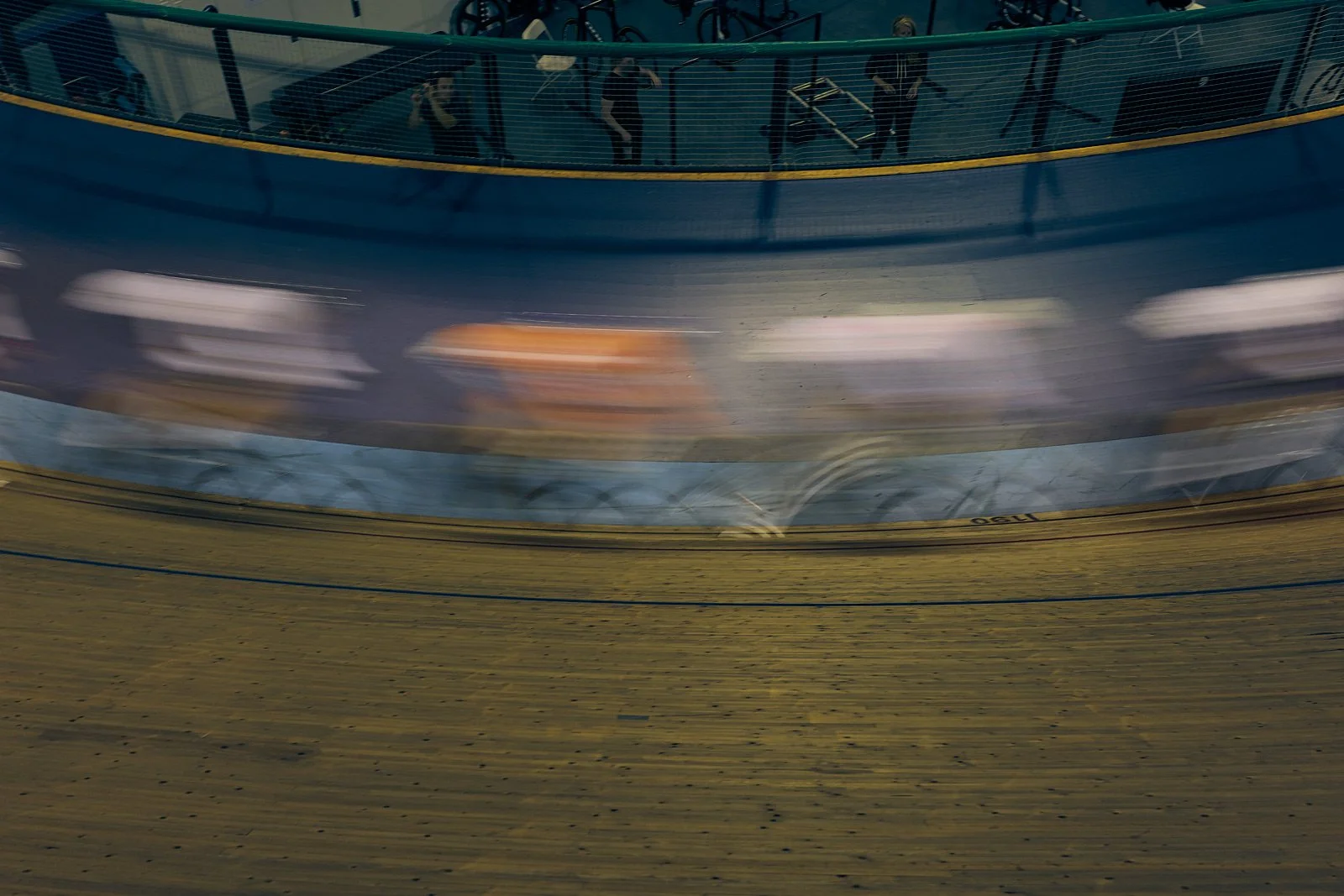
A few weeks ago, I had the pleasure of photographing the VSC Summer Slam 26 on the track at VELO Sports Center in Carson. It was my first time photographing a professional cycling event, and I approached it the way I approach most new experiences behind the camera: curious, prepared, and ready to capture what I saw.
What I didn't expect was how much this event would teach me about seeing speed, not just capturing it.
The Moment I Realized Something Was Missing
After a few races, I stepped back and looked through my images. Technically, they were solid. The riders were sharp, the composition was clean, the moment was frozen exactly as I intended. But something was missing.
I was freezing the action, and in doing so, I was leaving out the one thing that made this sport what it is: speed. Riders were carving around that track at speeds that rattle the wood beneath them, and my images, for all their clarity, sat still. They looked posed. They didn't feel like thirty-five+ miles an hour.
That realization sent me back to the rail with a different mindset, and for the first time in my career, I practiced panning on subjects moving this fast. See my progression below.
Action Frozen: Technically Correct, Emotionally Quiet
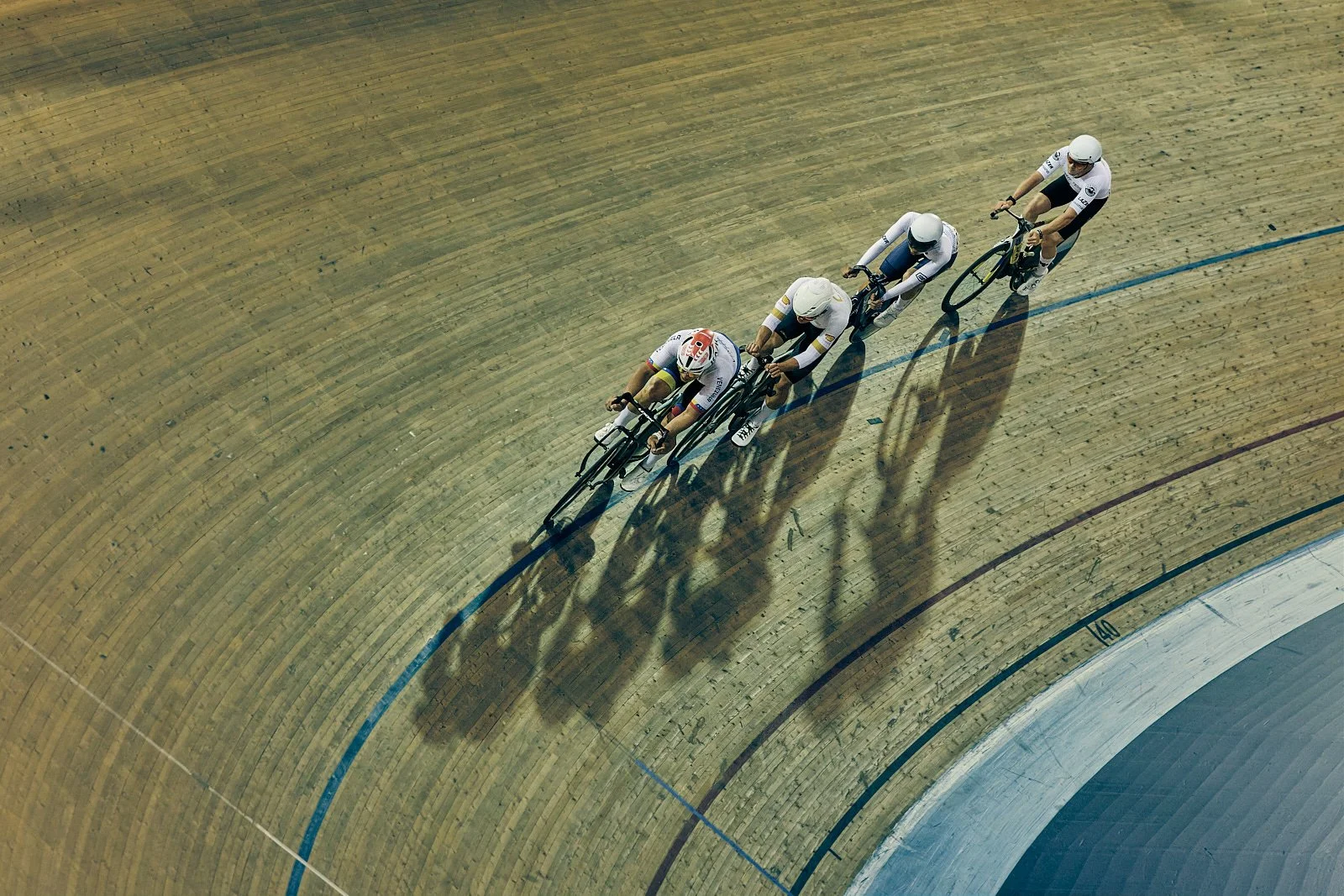
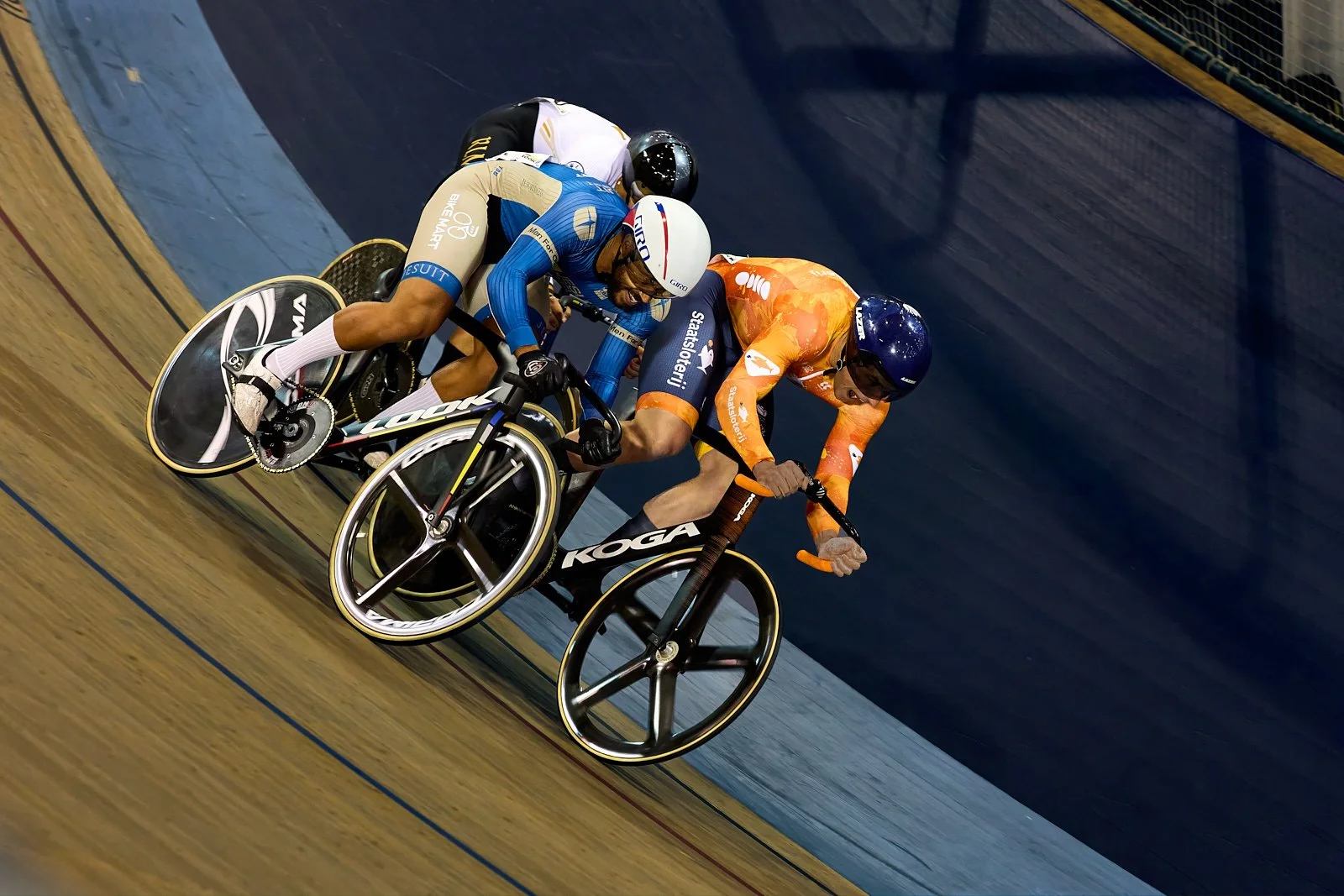
My first instinct, and the instinct most photographers start with, was a high shutter speed to freeze the riders mid-stride. There is a place for this. It shows form, position, and the intensity on a rider's face as they hold their line through the turn.
But looking at these frames side by side, I noticed the track floor looks the same whether a rider is drafting at speed or coasting to a stop. The stillness that makes a portrait feel composed is the same stillness that makes a bike race feel like it is standing still. Frozen action is honest, but it is not always true to what the moment felt like trackside.
Background Blur: Panning to Show Motion
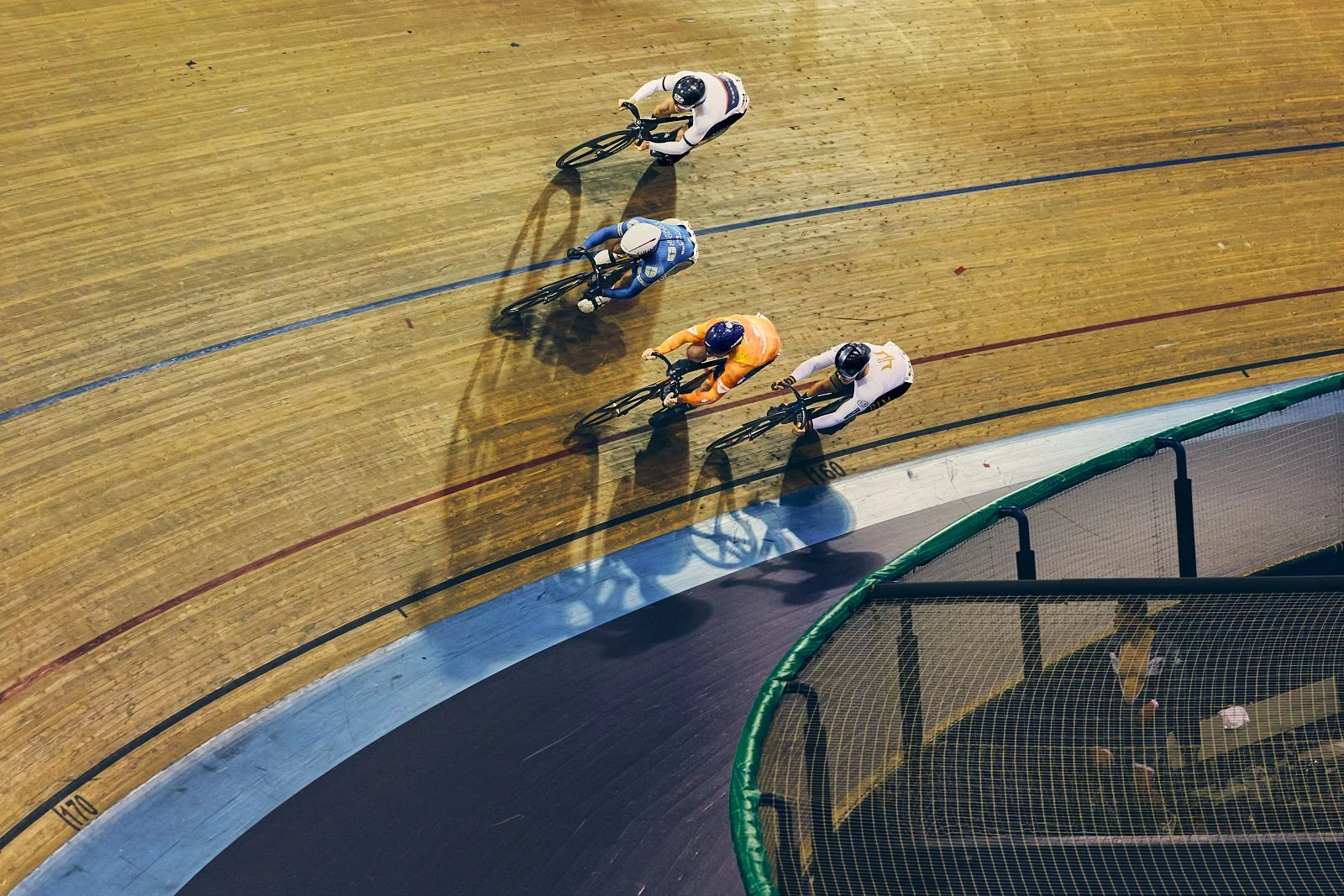
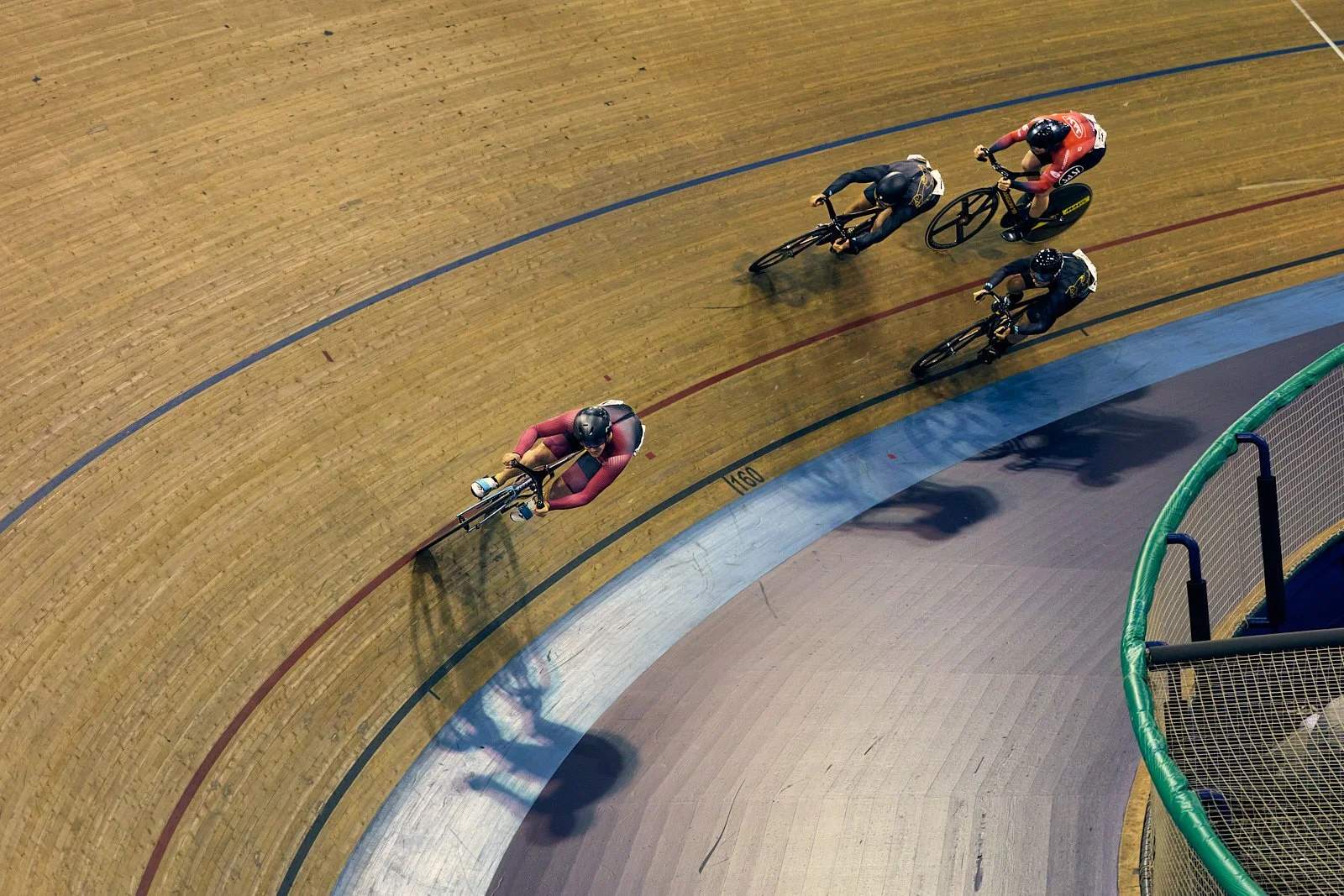
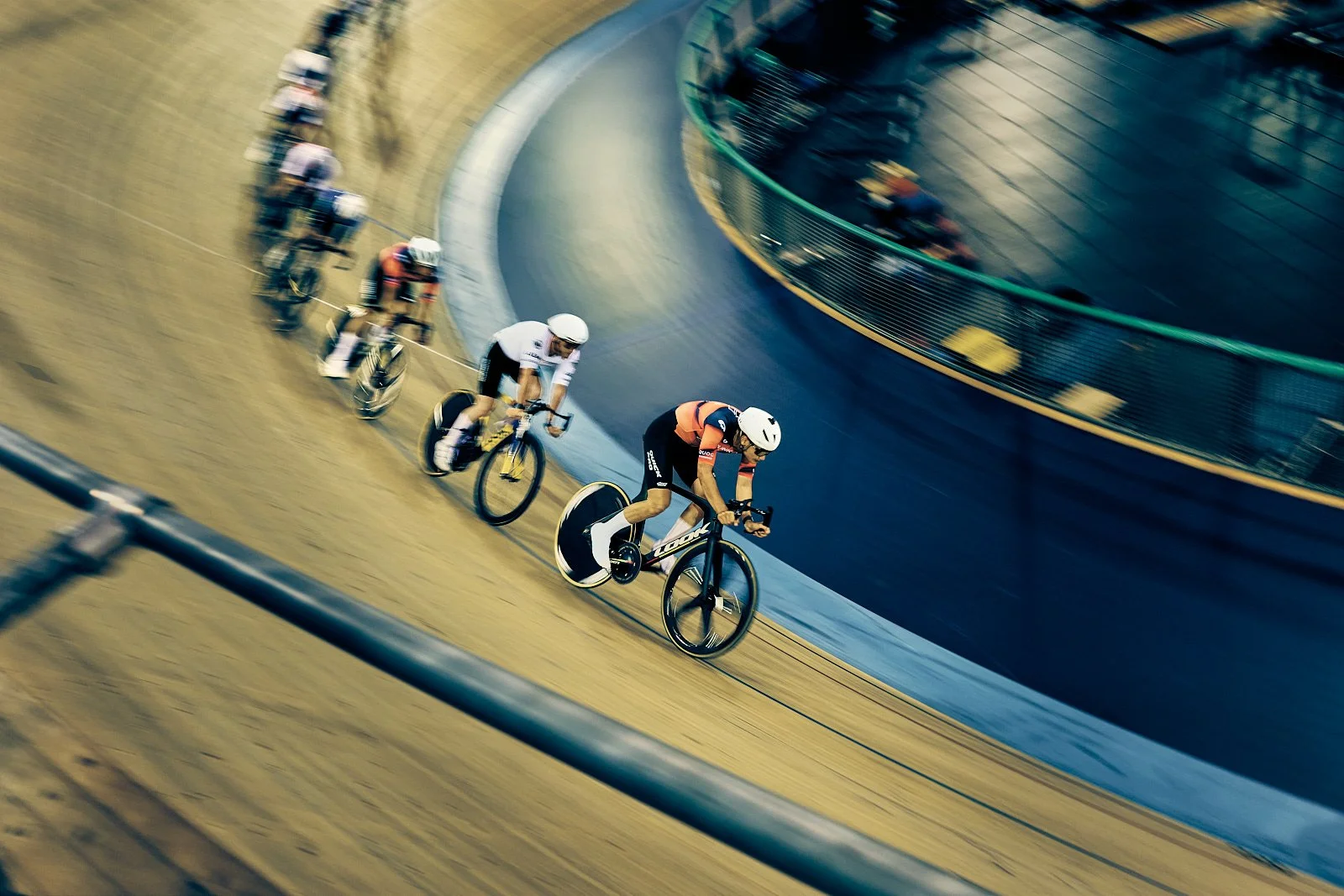
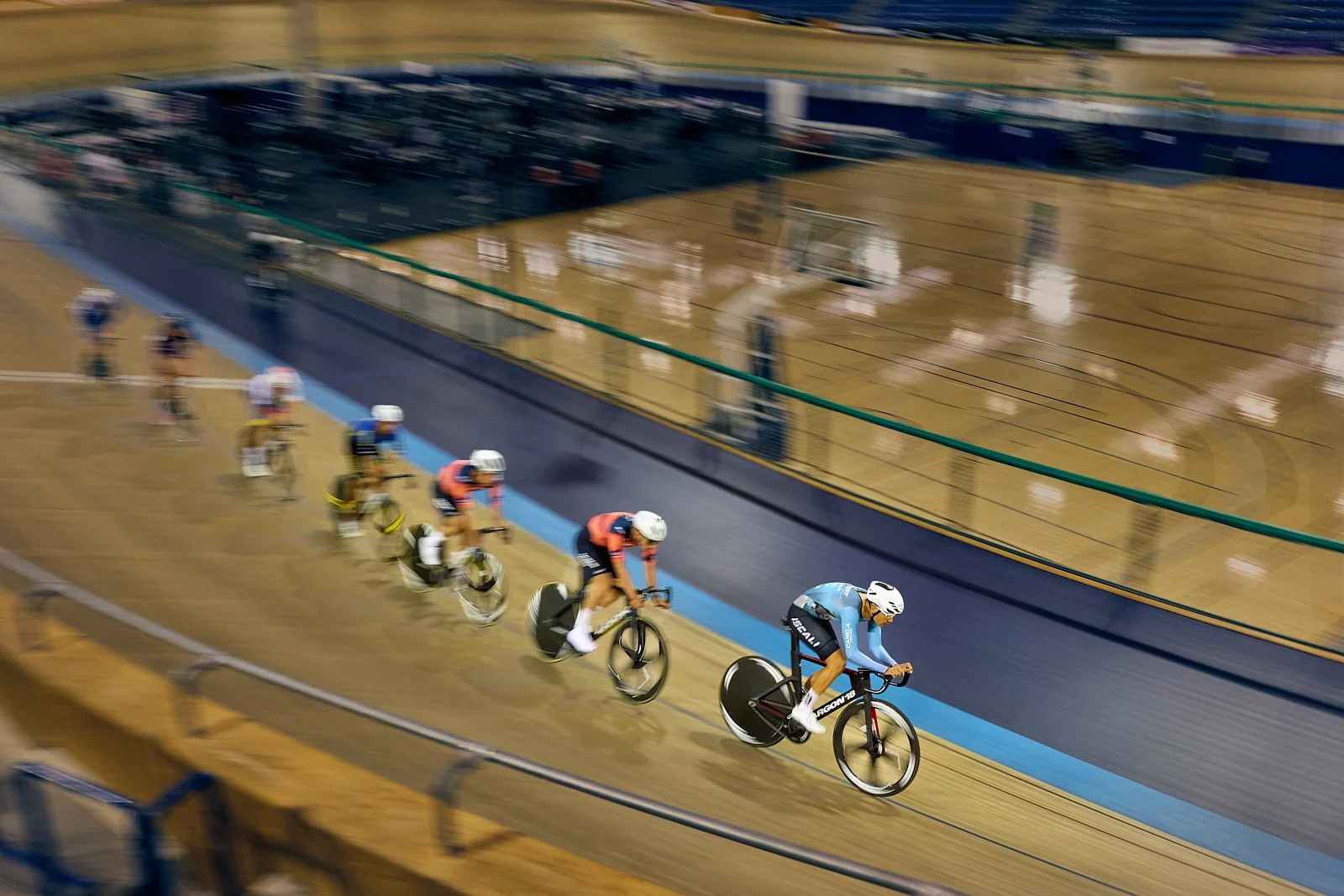
So I slowed my shutter and started to pan, moving the camera with the rider through the frame so they stayed sharp while everything around them- the boards, the stands, the other riders- dissolved into streaks of motion.
This was new territory for me. Panning a subject moving this fast asks for a different kind of trust: trust in your timing, trust in your hands, trust that the miss will teach you as much as the hit. It took more than a few attempts to find the rhythm of the track and match my movement to it. But when it landed, the image finally told the truth. You could feel the speed. You could feel the rider fighting the air in front of them. The blur wasn't a flaw, it was the point.
Background in Focus: A Different Kind of Motion
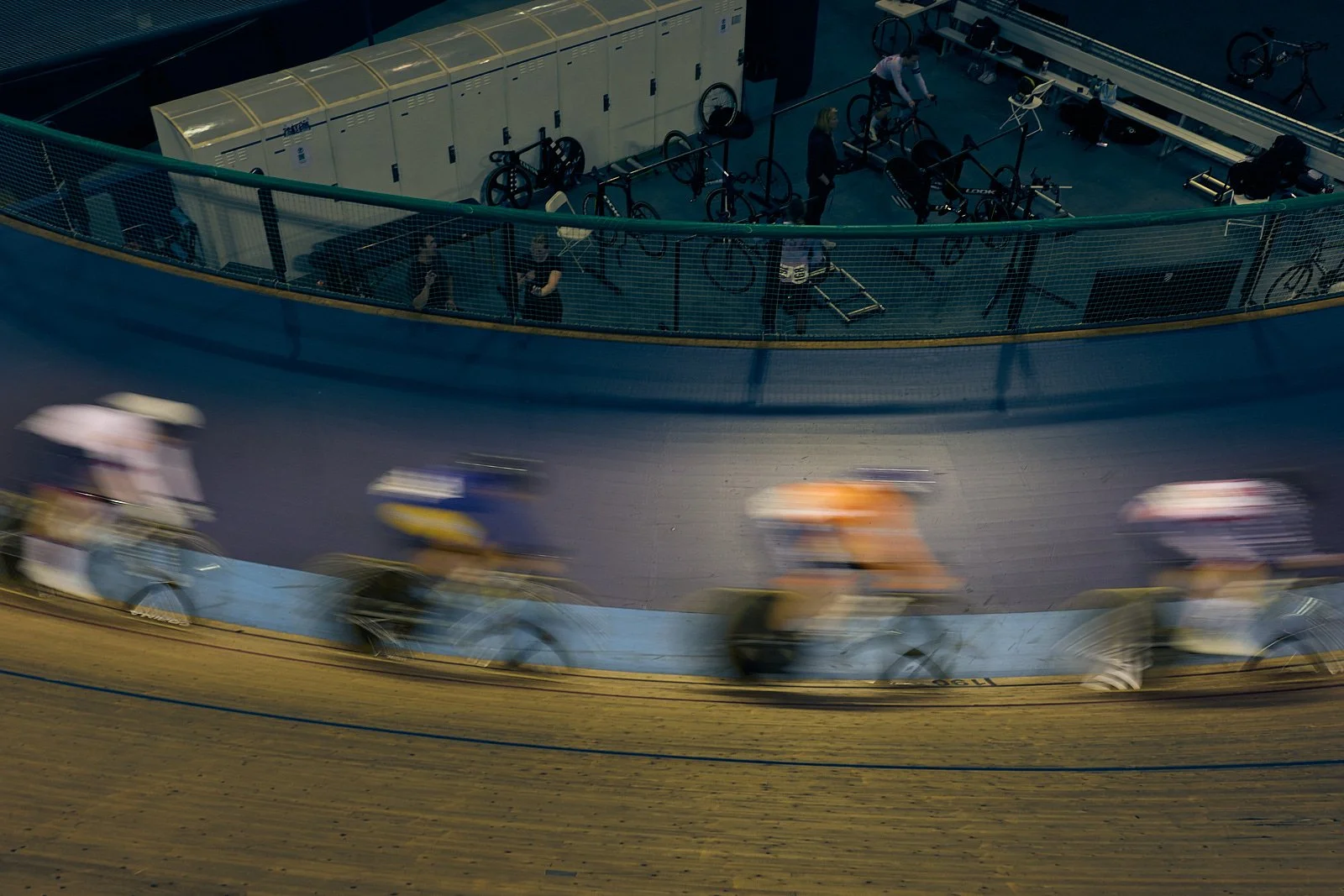
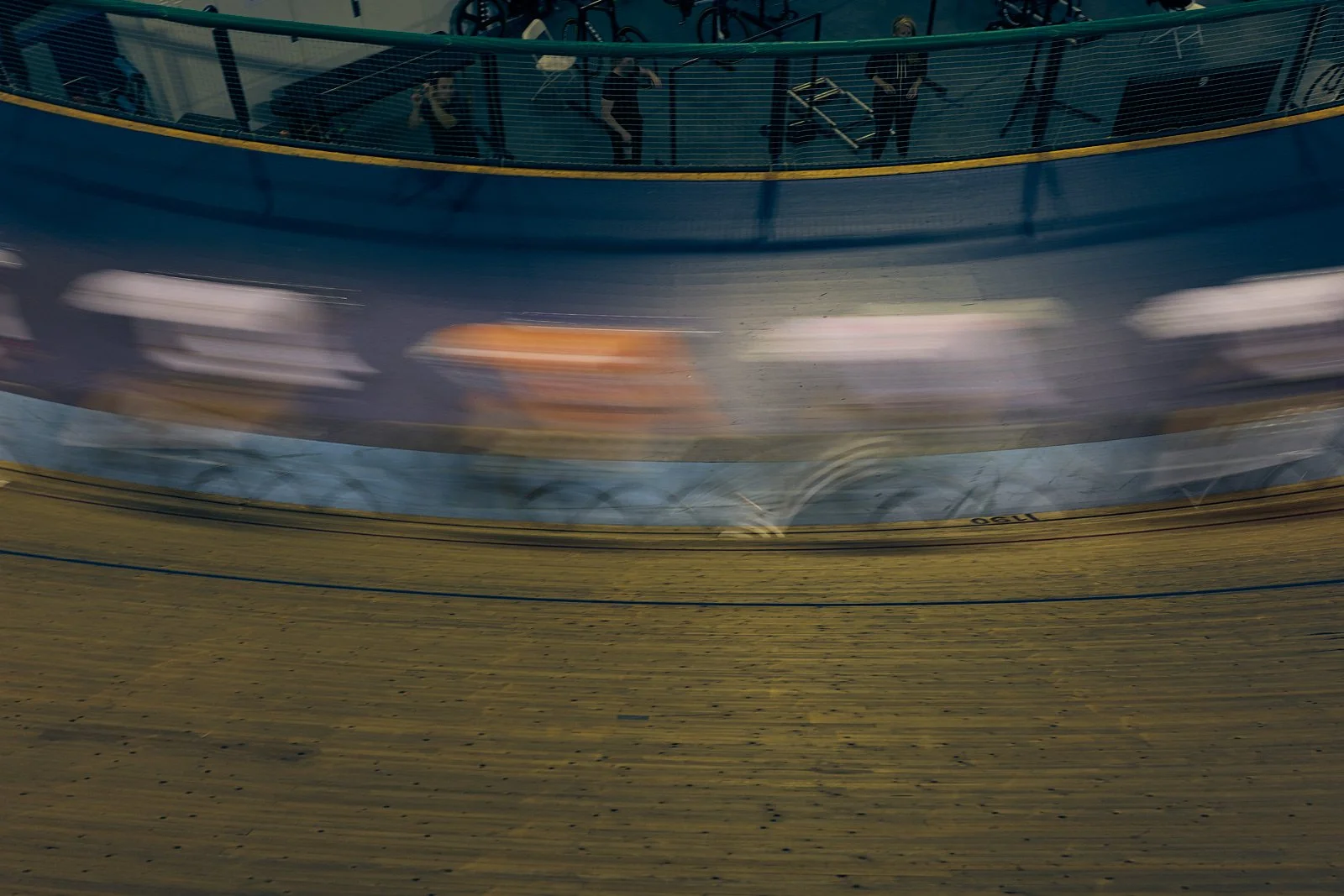
Once panning started to click, I wanted to push further. Instead of moving with the rider, I planted myself at a fixed point and let the track stay sharp, wood grain and lane markers crisp and unmoving, while the riders swept through the frame as a blur of color and motion.
This was the most creative leap of the day for me. It flips the usual relationship between subject and background, and it asks the viewer to feel the speed of what just passed through, rather than watch a rider frozen or trailing motion. It is a technique I had not used before this event, and it became one of my favorite results from the day.
What This Day Taught Me
I came to VSC Summer Slam 26 to photograph a bike race. I left having learned something about my own work: that capturing a moment well and capturing what it felt like to stand there are not always the same thing. Frozen action gave me clarity. Panning gave me motion. Holding still and letting the riders blur past gave me something I didn't know I was looking for, a new way to show intensity without saying a word about it.
This is my first cycling event, but it will not be my last. I am grateful to VELO Sports Center and everyone racing that day for giving me a track, literally and creatively, to grow on.
If you were at VSC Summer Slam 26 or you are curious about booking event coverage of your own, I would love to hear from you.